
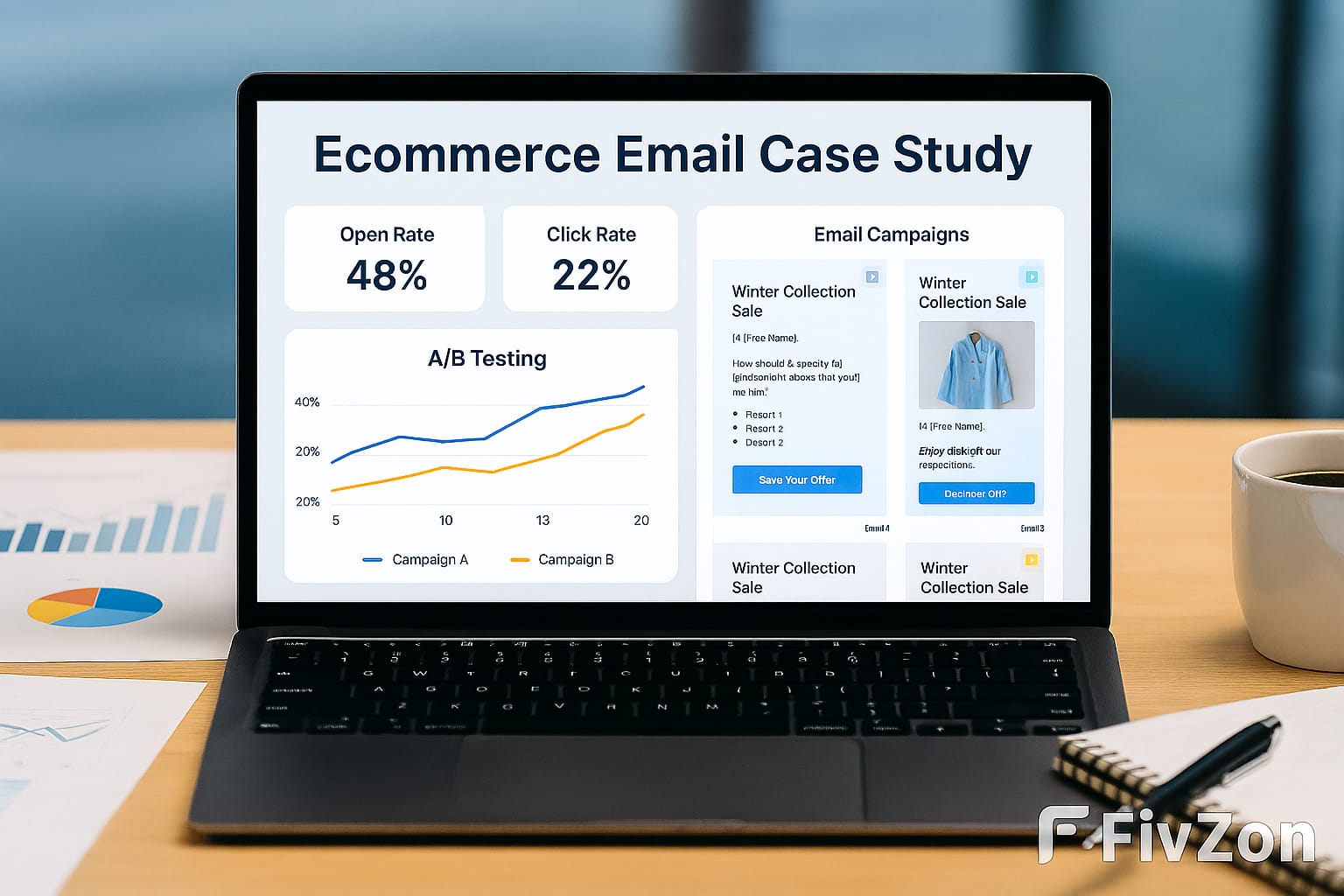
Ecommerce Email Case Study for High Conversions
This ecommerce email case study breaks down the strategies behind a high-performing campaign that turned dormant customers into repeat buyers. Analyzing real ecommerce campaigns is one of the most effective ways to understand what truly works in email marketing, providing a blueprint for optimizing your own performance and driving measurable revenue growth.
Overview of the E-commerce Campaign
The subject of this email marketing case study is a mid-sized online fashion retailer aiming to re-engage customers who had not purchased in the last 90 days. The primary objective was to win back at least 10% of this dormant segment and achieve a 5x return on investment (ROI) within a 30-day campaign period. The target audience consisted of over 15,000 subscribers who had previously shown brand loyalty but had become inactive.
A detailed e-commerce campaign analysis revealed that generic, one-size-fits-all promotions were no longer effective with this audience. Therefore, the new strategy relied heavily on personalization and automation. The campaign was executed using a suite of advanced tools, showcasing how the right Email Marketing Solutions can be a cornerstone of success.
Strategies Implemented
To achieve the ambitious goals, a multifaceted approach was adopted. The core of the strategy moved away from broadcast emails towards a more intelligent, automated system. This involved deep segmentation, dynamic personalization, and rigorous subject line testing to maximize engagement at every touchpoint. The following breakdown provides clear email conversion examples from the campaign.
Segmentation and Personalization
The dormant customer list was first segmented based on past purchase history. Customers were divided into categories like “Women’s,” “Menswear,” and “Accessories.” This allowed for highly targeted content. For example, a customer who had previously bought women’s dresses received an email showcasing the new dress collection, rather than a generic store-wide update.
Personalization went a step further by using dynamic content blocks to insert the customer’s first name and reference their last purchase category. This simple touch made the emails feel more like a personal recommendation than a mass marketing message, a key factor in boosting open rates. To dive deeper into these tactics, read our ecommerce email case study to learn proven strategies for boosting sales and engagement.
Automation and Drip Sequences
Instead of a single “We miss you!” email, a three-part automated drip sequence was created. The workflow was triggered for any customer who hit the 90-day inactivity mark:
- Email 1: Gentle Nudge. A personalized email showcasing “What’s New” in their preferred category.
- Email 2 (sent 3 days later if no open/click): Incentive Offer. A compelling subject line with a time-sensitive 15% discount to encourage a quick purchase.
- Email 3 (sent 5 days later if no purchase): Final Call. A last-chance email emphasizing the expiring offer and highlighting best-sellers.
This automated sequence ensured timely, relevant follow-ups without manual intervention, dramatically improving conversions compared to previous single-email efforts. To learn how to build similar powerful workflows, read our ecommerce email case study to learn proven strategies for boosting sales and engagement.
Results and Insights
The campaign’s online store email results surpassed all initial objectives. The data provided clear evidence of the strategy’s success and offered valuable insights for future campaigns. The final numbers were a testament to the power of a well-executed email marketing plan.
Here are the key performance indicators:
- Open Rate: Increased to an average of 28% across the sequence, up from 12% on previous campaigns to this segment.
- Click-Through Rate (CTR): Achieved an average CTR of 4.5%, with the incentive email performing best at 6.2%.
- Conversion Rate: 14% of the targeted dormant customers made a purchase, exceeding the 10% goal.
- Revenue and ROI: The campaign generated over $50,000 in revenue, delivering an impressive 18x ROI.
These email conversion examples demonstrate that a personalized, automated approach is significantly more effective than generic broadcasts for re-engaging customers. You can explore more detailed reports and discover additional winning strategies when you read our ecommerce email case study to learn proven strategies for boosting sales and engagement.
Lessons Learned
This ecommerce email case study reinforces several best practices. First, granular segmentation is not optional; it’s essential for relevance. Second, automation is key to scaling personalized communication effectively. Finally, a multi-touch drip sequence consistently outperforms a single email blast, especially when trying to win back inactive customers. Marketers can apply these lessons by investing more time in audience analysis before launching a campaign. For more examples and analyses, you can explore our other Case Studies.
Next Steps for Your Business
The insights from this campaign can be directly applied to your own e-commerce business. Start by analyzing your customer data to identify valuable segments you can target with personalized content. Begin building simple automated workflows, such as a welcome series or an abandoned cart reminder.
Continuously test your subject lines, offers, and calls-to-action to see what resonates with your audience. By adopting the principles outlined in this ecommerce email case study, you can create a more effective email marketing program that not only engages customers but also drives significant, predictable revenue for your online store.
Disclaimer: This article may include affiliate links. We may earn a commission at no extra cost to you. Read our Affiliate Disclosure for details.